Terraria
Key Highlights
While not technically advanced, the visual design is praised for its clarity, consistency, and expressive detail, particularly in environmental elements and enemy animations.
Performance is exceptionally lightweight, allowing the game to run on low-end hardware, including systems with minimal processing power or outdated graphics cards.
Some players report that the game’s progression system, particularly in higher difficulties, can become overly reliant on grinding and resource farming, leading to repetitive gameplay.
Review
Gameplay and Core Mechanics
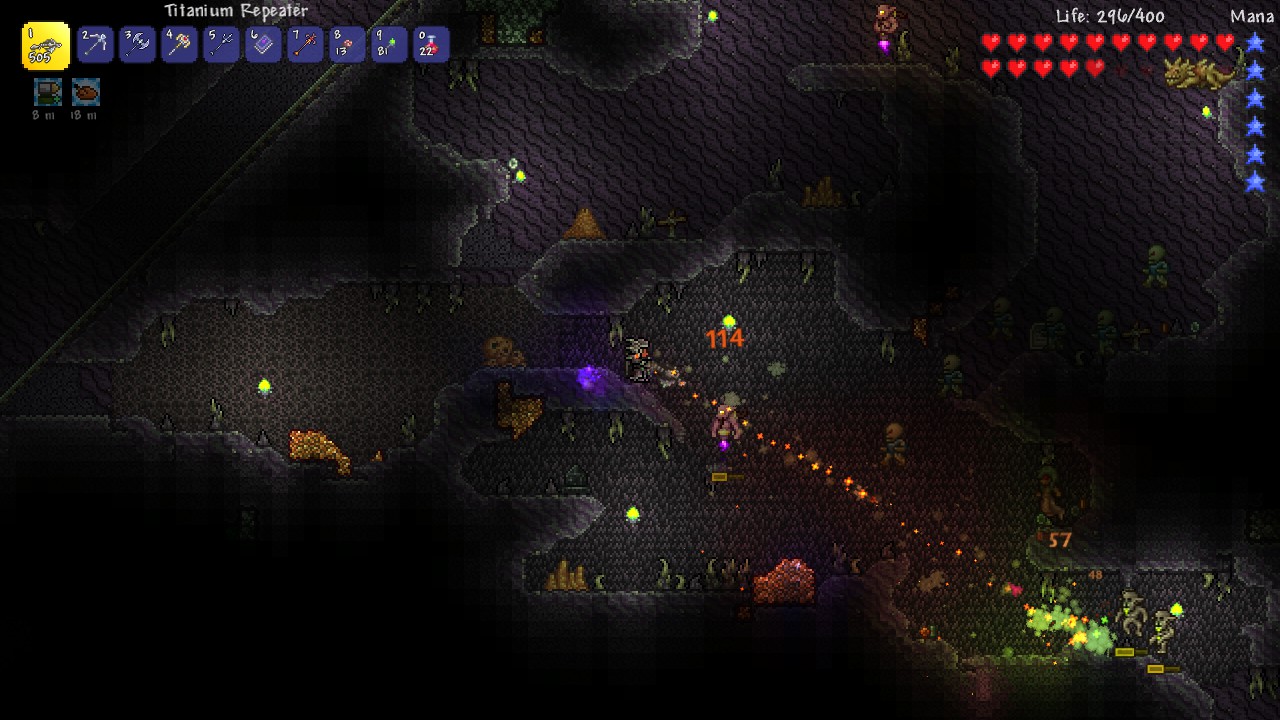
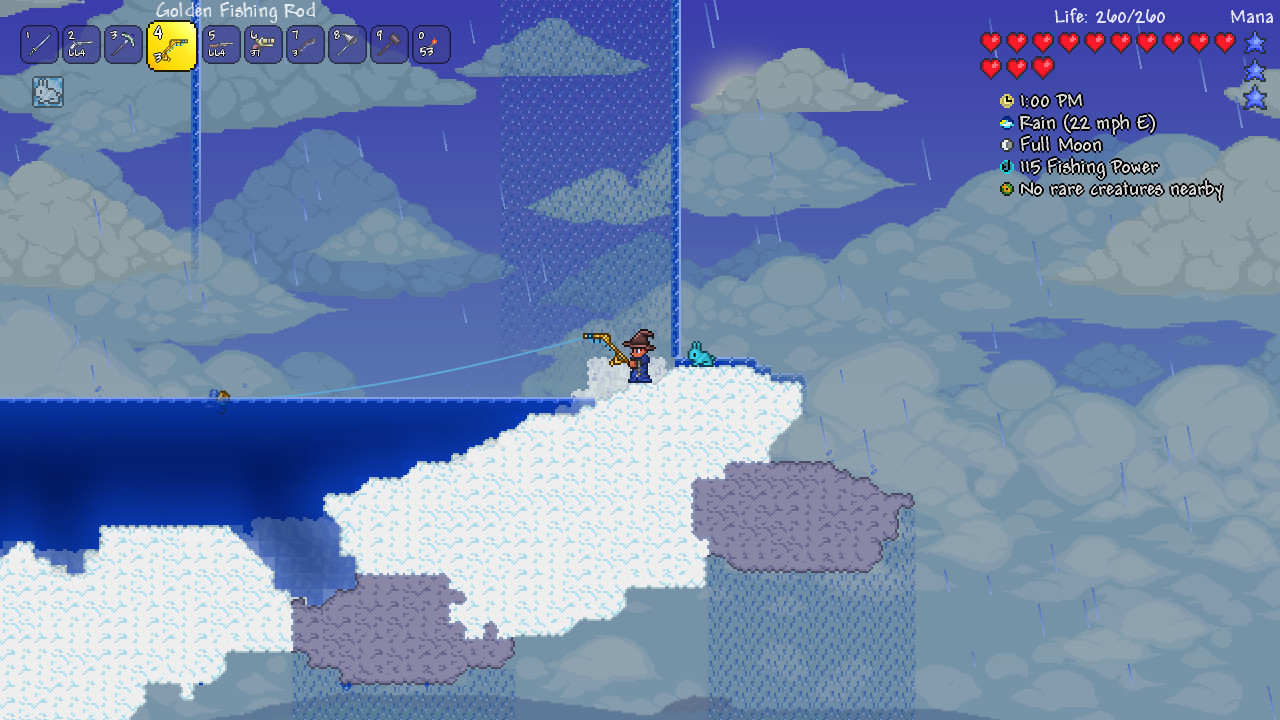
The game features a persistent, procedurally generated 2D world that evolves dynamically across multiple biomes, including forests, deserts, snow biomes, oceans, and underground caverns. Players begin with minimal equipment and must survive the initial night by constructing shelter, gathering resources, and crafting basic tools. The core gameplay loop centers on exploration, resource gathering, crafting, combat, and progression through increasingly complex challenges. A defining characteristic is the absence of a traditional tutorial or guided quest system, requiring players to rely on external resources such as wikis, community forums, and modding tools to understand mechanics. This design fosters a deep learning curve, with progression often achieved through iterative trial and error, especially in higher difficulty modes like Expert and Hardcore.
Progression, Challenges, and Player Engagement
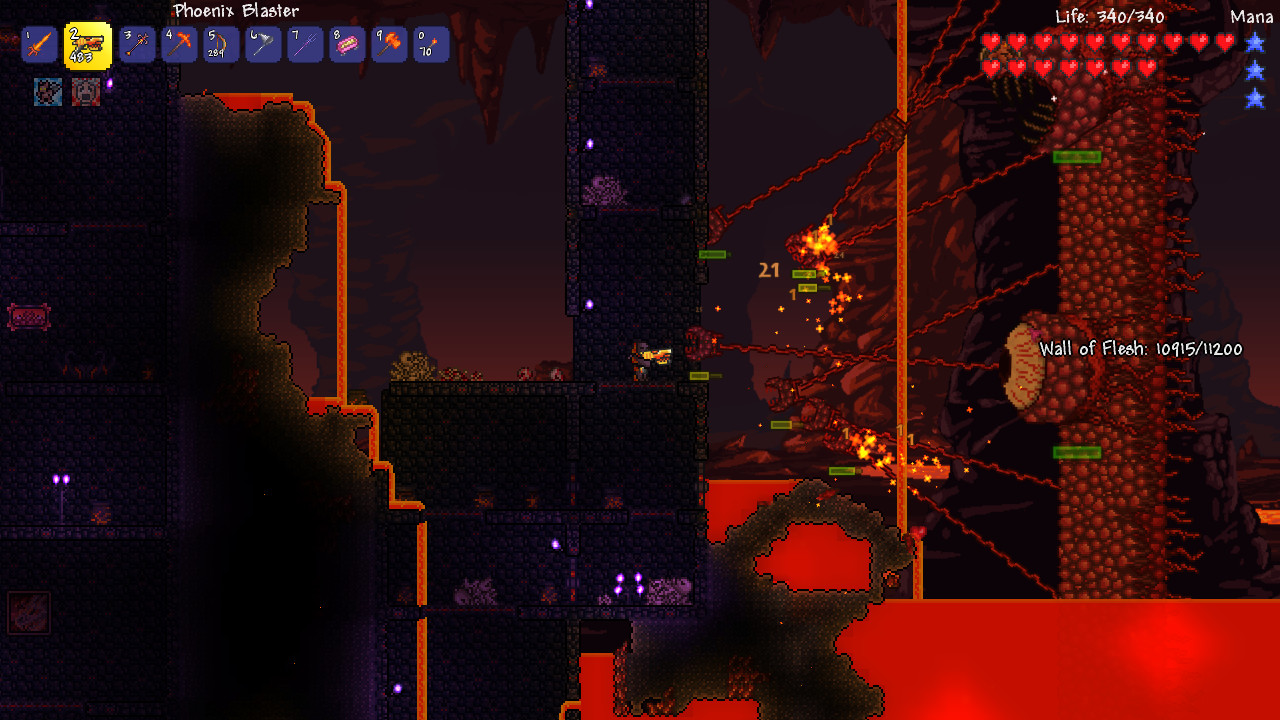
Game progression is structured around defeating a series of escalating bosses, each introducing new mechanics, items, and world transformations. Early-game challenges involve surviving night-time invasions by hostile mobs, while later stages require strategic planning, resource management, and precise execution to overcome powerful entities such as the Wall of Flesh, the Moon Lord, and the Plantera. The game emphasizes long-term engagement through extensive replayability, with each new world offering unique terrain, item drops, and enemy spawns. Players report spending hundreds to thousands of hours across multiple playthroughs, often revisiting older worlds or experimenting with different builds and strategies. The inclusion of achievements, challenges, and mod support further extends gameplay duration, with many players noting the game’s ability to sustain interest over extended periods.
Graphics and Performance
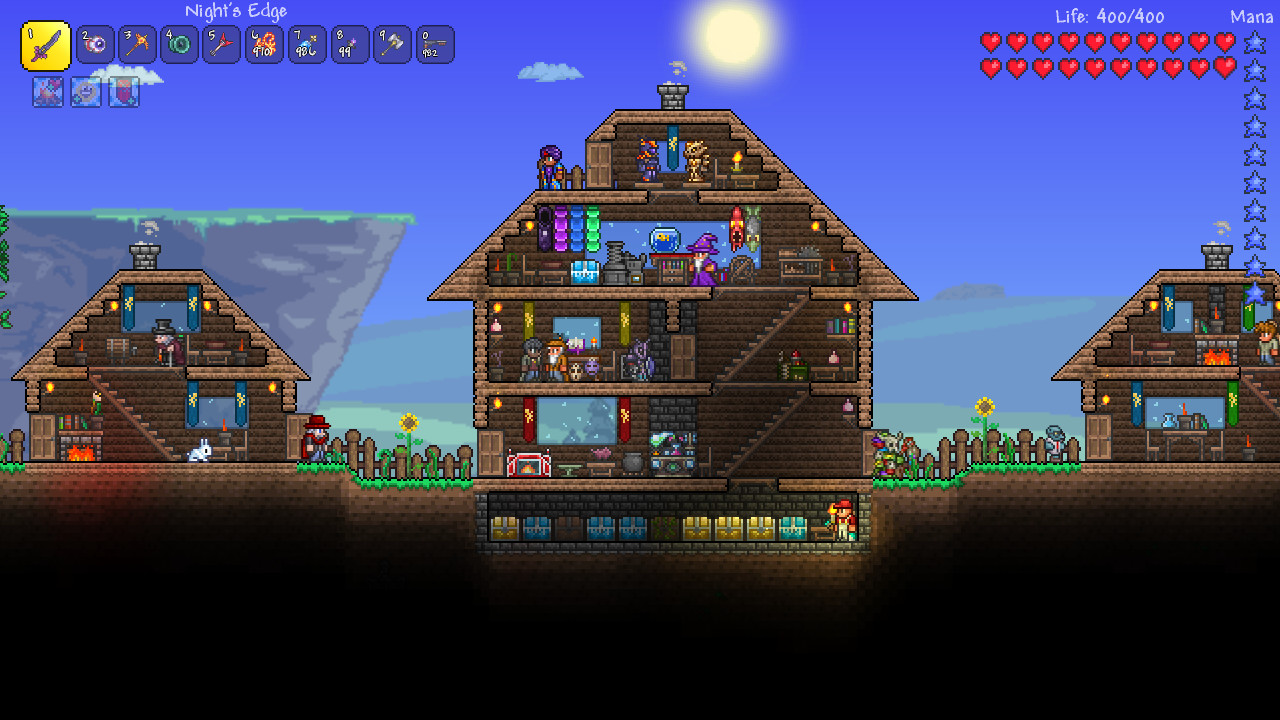
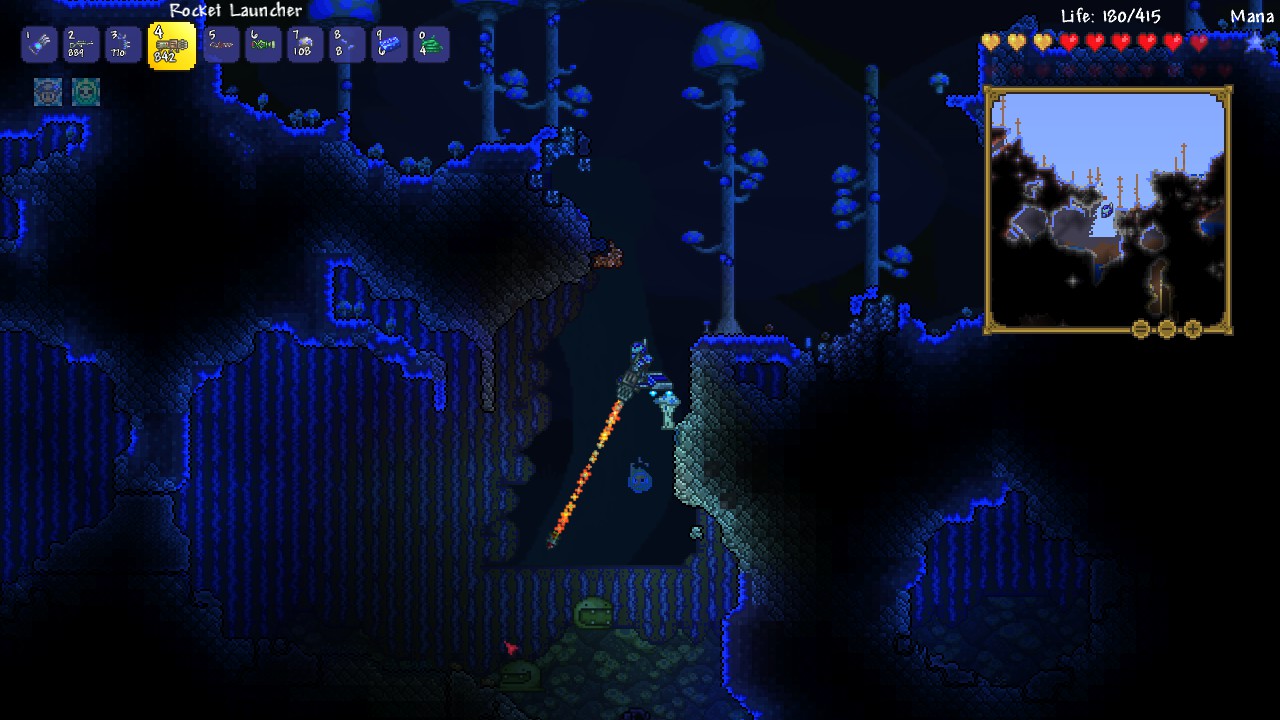
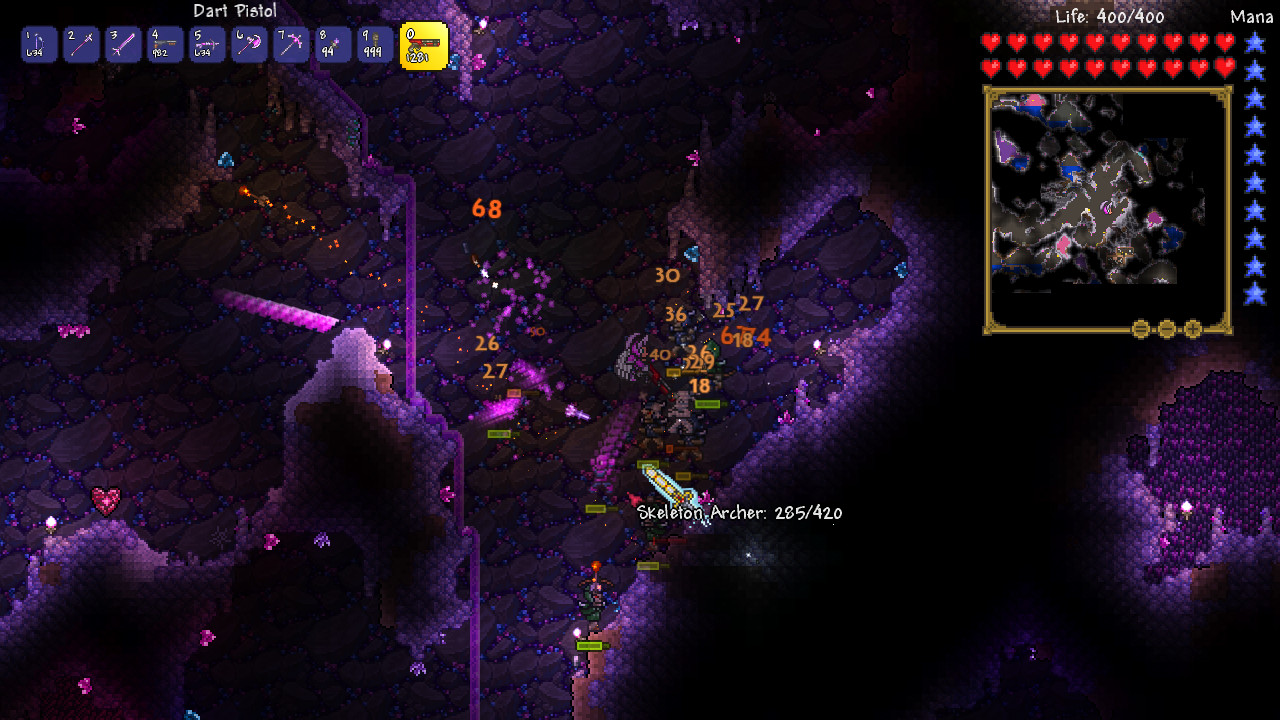
The game employs a retro-inspired 2D pixel art style, characterized by bold colors, distinct blocky textures, and a limited color palette that contributes to a nostalgic aesthetic. While not technically advanced, the visual design is praised for its clarity, consistency, and expressive detail, particularly in environmental elements and enemy animations. The audio design features a minimalist soundtrack that complements the atmosphere, with distinct musical themes for different biomes and boss encounters. Performance is exceptionally lightweight, allowing the game to run on low-end hardware, including systems with minimal processing power or outdated graphics cards. This accessibility has contributed to its broad appeal across multiple platforms, including mobile, PC, and consoles.
Story, Worldbuilding, and Narrative Elements
Although the game lacks a traditional narrative or linear storyline, it presents a richly layered lore through environmental storytelling, item descriptions, and NPC dialogue. The world is shaped by opposing forces such as the Corruption and the Hallow, which spread through the landscape and influence enemy behavior and item drops. Players encounter a variety of NPCs, each with unique personalities and needs, contributing to a sense of community and world depth. The game’s lore is often interpreted and expanded upon by the community, with players constructing their own narratives based on in-game events and mechanics. This open-ended approach to storytelling allows for personal interpretation, fostering a sense of ownership and immersion, though it may frustrate players seeking a more defined plot.
Value, Community, and Longevity
Released initially in 2011, the game has received over a decade of continuous development, including major free updates such as the "Labor of Love" (1.4) and "Journey’s End" expansions. These updates have significantly expanded content, introduced new mechanics, and improved existing systems, making the game feel perpetually "alive." The developers have maintained a consistent $10 price point with frequent sales, offering exceptional value for money. The game's longevity is further supported by a vibrant modding community, with tools like TModLoader enabling extensive customization. Players frequently cite the game’s value, replayability, and developer commitment as key reasons for recommendation. Despite the lack of official DLC or microtransactions, the game remains a benchmark for long-term support and player engagement in the indie gaming space.
Common Criticisms and Limitations
Despite widespread acclaim, several recurring criticisms are noted. The most prominent is the steep learning curve and lack of in-game guidance, which can deter new players and lead to frustration during early stages. Some players report that the game’s progression system, particularly in higher difficulties, can become overly reliant on grinding and resource farming, leading to repetitive gameplay. The absence of a built-in language translation for all versions has also been cited as a barrier for non-English speakers, though community-created localization packs are available. Additionally, some players note that certain aspects of the game, such as inventory management and item crafting, can become overwhelming due to the sheer volume of content, requiring organizational tools or mod support to manage effectively.
Screenshots
Game Details
- Price
- AUD $14.50
- Platforms
- Windows Mac Linux
- Publisher
- Re-Logic